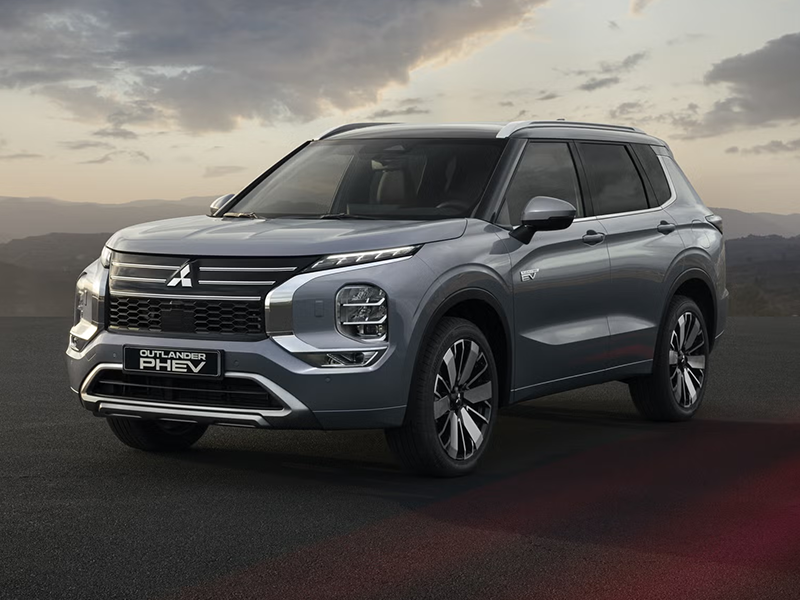
Does a hybrid vehicle need to be plugged in? Can it run on electricity? What separates a conventional hybrid from a plug-in hybrid? To understand these technologies, let’s compare three SUVs offered through Groupe Véloce dealerships: the 2027 Jeep Cherokee, the 2027 Hyundai Santa Fe and the 2026 Mitsubishi Outlander PHEV.
All three combine a gasoline engine with electric propulsion. However, they use electricity differently, which affects their suitability for your driving habits and access to charging.
Hybrid vs. Plug-In Hybrid: The Essential Difference
The Cherokee and Santa Fe use hybrid powertrains that do not require plugging in. Their systems automatically manage the contribution of the gasoline engine and electric propulsion. The battery recovers energy when the vehicle slows down, among other operating conditions.
You do not need to install a charging station to benefit from their hybrid operation. You fill up with gasoline, and the vehicle manages its energy use.
The Outlander PHEV is a plug-in hybrid. Its battery can be charged from an external power source, allowing it to travel a greater distance on electricity. Its gasoline engine remains available to continue the journey when driving conditions or energy requirements call for it.
|
Model |
Powertrain Type |
External Charging |
Key Feature |
|---|---|---|---|
|
2027 Jeep Cherokee |
Hybrid |
No plugging in required |
Standard Jeep 4x4 system |
|
2027 Hyundai Santa Fe |
Hybrid |
No plugging in required |
Three rows, with seven seats as standard |
|
2026 Mitsubishi Outlander PHEV |
Plug-in hybrid |
Allows the battery to be recharged |
Advertised electric range of up to 72 km |
Jeep Cherokee Hybrid: A Straightforward Choice with Standard 4x4
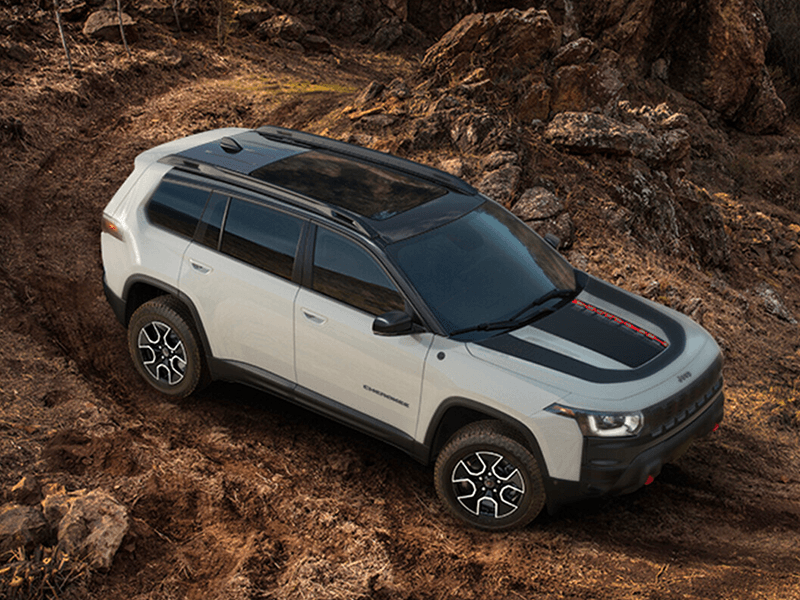
The 2027 Jeep Cherokee combines a hybrid powertrain with a standard 4x4 system. Jeep advertises an estimated combined fuel consumption rating of 6.3 L/100 km.
This approach will appeal to drivers who want to reduce fuel consumption without adding charging to their daily routine. Whether travelling around Témiscouata or heading out for the weekend, the Cherokee offers hybrid operation while retaining the familiar refuelling habits of a gasoline vehicle.
Hyundai Santa Fe Hybrid: Three-Row Versatility
The 2027 Hyundai Santa Fe offers seven seats as standard. A six-seat configuration with second-row captain’s chairs is also available in the Ultimate Calligraphy trim.
That seating flexibility is an important part of its appeal. For a family in Edmundston or Madawaska, choosing between six and seven seats can matter as much as the powertrain. Third-row access, accommodating children and organizing everyday travel are all worth evaluating during a test drive.
Like the Cherokee, the Santa Fe Hybrid does not require plugging in.
Mitsubishi Outlander PHEV: Making the Most of Regular Charging
The 2026 Mitsubishi Outlander PHEV has a 22.7-kWh battery and an advertised electric range of up to 72 km. It also offers a seven-seat, 5+2 layout and standard S-AWC all-wheel control.
For a driver in Rivière-du-Loup who can charge regularly, that range could cover a significant share of daily travel. Actual results depend on distance, temperature and driving conditions. The gasoline engine can also operate even when energy remains in the battery.
Which SUV Fits Your Driving Habits?
Start with your daily routine. Without convenient charging access, the Cherokee and Santa Fe offer a straightforward transition to hybrid driving. With regular charging available, the Outlander PHEV provides more opportunities to drive on electricity.
Next, compare interior space, seating arrangements and how each vehicle feels on the road. Explore these models at Témis Chrysler, Edmundston Hyundai and Rivière-du-Loup Mitsubishi to find an option suited to your everyday travel.